
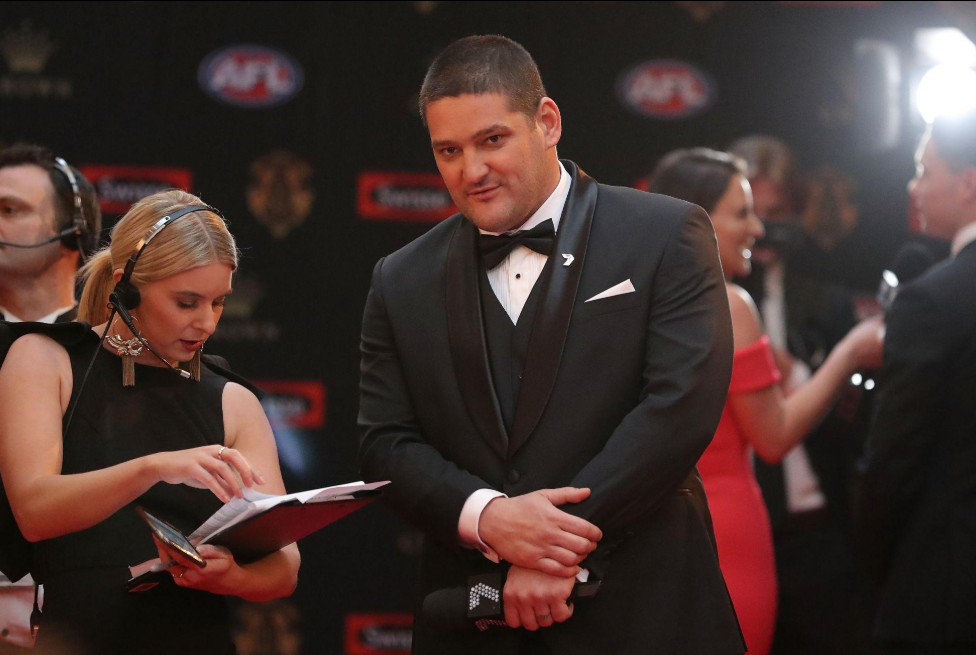
Brendan Fevola embodies a recurring pattern in modern celebrity culture: the transition from athletic excellence to media personality, complicated by public scrutiny and personal instability.
AFL Career: Talent and Visibility
Fevola’s career in the AFL was defined by performance and charisma. As a forward, he combined:
- technical scoring ability
- physical presence
- entertainment value
This combination made him highly visible. However, visibility in sports is increasingly tied to personality, not just performance.
Public Persona and Media Amplification
Fevola’s personality extended beyond the field, creating a media narrative that blurred professional and personal boundaries.
In modern sports culture:
- athletes are content
- behavior is commodified
- narratives extend beyond competition
Fevola became part of this system, where attention is both opportunity and risk.
Collapse and Public Scrutiny
Periods of personal difficulty became highly public. This reflects a broader phenomenon:
Failure in public figures is not private—it is distributed, analyzed, and monetized.
Fevola’s challenges were not unique, but their visibility amplified their impact.
Reinvention Through Media
Transitioning into radio and television required a redefinition of identity. Fevola shifted from:
- athlete → entertainer
- performer → personality
This transition is not automatic. It requires:
- adaptability
- self-awareness
- audience re-engagement
Fevola succeeded by leaning into relatability rather than authority.
Authenticity as Currency
In his media career, Fevola’s openness about past struggles became an asset. Audiences respond to:
- vulnerability
- humor
- perceived honesty
This creates a new form of credibility—not based on success, but on narrative transparency.
Conclusion
Brendan Fevola’s career illustrates how public figures can reconstruct identity after failure. His journey reflects the broader dynamics of media culture, where reinvention is possible, but only through adaptation and narrative control.